Innovating Sustainability with the Oliwa Project
Discover how the Oliwa Project is revolutionizing the circular economy through innovative
Pioneering Circular Economy
Join the Movement
Be part of a sustainable future by exploring our groundbreaking initiatives.
About the Oliwa Project
OLIWA aims to repurpose olive by-products into valuable co-products through innovative, sustainable solutions. By applying circular economy and zero-waste principles, the project is creating new value chains in key sectors such as animal feed, food additives, packaging, and renewable energy.

Our Objectives
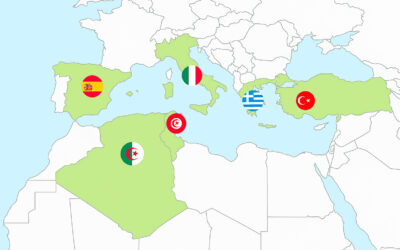
To conduct research activities to support the repurposing of olive waste to coproducts in a circular economy approach for feeds, functional ingredients, packaging and biogas, demonstrating the feasibility and sustainability of the circular value chain in six Mediterranean locations (Italy, Spain, Greece, Turkey, Algeria and Tunisia).
Specific Objectives (SO1-SO12)
SO1: Olive By-products in Insect Rearing
To explore OB’s role in insect rearing; evaluating insect meal quality, waste reduction, and sustainability.
SO2: In-vitro Testing of Olive Natural Extracts and Insect Meals
To investigate the effects of olive NE, insect meals and their association by means of in-vitro testing.
SO3: Animal Model Testing for Antioxidant Effects
To investigate the effects of olive NE on animal models (ApoE KO mice) to evaluate their antioxidant effects.
SO4: Olive Natural Extracts as Feed Additives
To investigate and demonstrate the use of the olive NE as feed additives for poultry and fish farming.
SO5: Insect Meal as Animal Feed
To investigate and demonstrate the use of insect meal as feed for poultry and fish farming, and evaluate the sustainability of this solution.
SO6: Enhanced Animal Health and Product Quality
To enhance animal health and product quality through NE/insect incorporation into poultry and fish diets.
SO7: Food Packaging Development
To investigate OB’s potential in food packaging to enhance preservation and minimise food losses.
SO8: Biogas Production
To investigate incorporation of animal and insect manure as well as OBs for biogas production.
SO9: Sustainability Assessment
To assess the sustainability of the novel processes and products, and circular repurposing model, in the Water-Energy-Food-Ecosystem (WEFE) Nexus approach through Life Cycle Assessment (LCA), Environmental Footprint (EFP) evaluation, and a local level WEFE framework.
SO10: Stakeholder Engagement
To enhance stakeholder interactions through a Multi-stakeholder approach and an online ICT platform, engaging stakeholders in the olive oil local value chain and the poultry/fish supply chain.
SO11: Business Model Development
To produce a business model for the OBs for each demonstration local value chain, to facilitate adoption by farmers and stakeholders, thus fostering the growth of the circular economy.
SO12: Engagement and Dissemination
To implement successful engagement (MSA), dissemination-communication activities and training classes to enhance the capacity of farmers, smallholders, and the supply chain with at least 50% of women trainees, to effectively adopt OLIWA solutions. Additionally, to collaborate with other cognate projects in sundry activities, providing joint policy recommendations to reduce barriers and promote accessibility. To implement the FAIR and open science and data principles.
Who We Are
An International Mediterranean Consortium
Coordinated by the University of Torino (UNITO), OLIWA brings together 25 partners from Italy, Spain, Greece, Turkey, Algeria, and Tunisia. The consortium includes universities, research institutes, SMEs, and NGOs, working together to promote sustainable innovation in the olive industry.
CIRCULAR VALUE
OLIWA Expected Impacts
1. Food Loss and Waste Reduction
Achievement of 25% minimum reduction in food losses and waste through antioxidant and functional biopackaging solutions. The project targets food loss prevention at retailers and consumer levels through new functional biopackaging derived from olive by-products. The combination of Upcycling (improving shelf life through antioxidants and functional biopackaging) and Recovery of OBs and other by products (e.g. poultry and insect manure) of the proposed value chain is expected to achieve in the demonstrations the call target of at least 25% reduction in food losses and waste.
2. Alternative Protein and Feed Development
Creation of sustainable insect-based protein alternatives and natural extract feed additives to reduce dependency on imported feeds. By proposing insects as alternative feed proteins for animals and utilising OBs for insect meal production, OLIWA addresses the EU’s need for sustainable food security and reduced reliance on imported feeds. The project aims for 50-100% substitution of conventional proteins (soybean meal and fish meal) with insect meals, while incorporating olive natural extracts to enhance nutritional properties and reduce antibiotic use in animal feeds.
3. Circular Economy Model Implementation
Development of a zero-waste circular economy model across six Mediterranean countries using olive by-products. OLIWA in this regard bolsters the ambition of zero waste by olive waste utilisation in insect rearing for animal feeding, bio-packaging, and biogas production to achieve the adoption of circular economy based sustainable systems across six Mediterranean countries. The overall objective of this project, “Repurposing OLIve WAste in circular economy solutions for feeds, additives, packaging, and biogas – OLIWA”, is to conduct research activities to support the repurposing of olive waste to coproducts in a circular economy approach
4. Renewable Energy Production and Resource Efficiency
Generation of alternative biogas energy sources achieving 20% increase in utilization of renewable energy within the project. The project targets biogas yields exceeding 599.4 m³ with over 60% from OLIWA alternate sources, including insect frass, poultry manure, and olive waste. KPIs: biogas yields of 700 m³/ ton of poultry waste, 500 m³/ ton of insect frass, and 600 m³/ ton of OB. Maintaining energy conversion efficiency (65% for poultry waste, 60% for insect frass, 70% for OB)
5. Enhanced Food Quality and Shelf Life
Improvement in food preservation through bioactive packaging extending shelf life by 5-20%. KPIs: incorporating and testing at least 3 additives into biodegradable composites developed for packaging, aiming for a 5-10% increase in shelf life, without reduction of their mechanical and barrier properties; improving shelf life by 20% through the further integration of NE/polysaccharides/proteins from OBs and insects thus ensuring biodegradability. The packaging solutions offer improved barrier properties against water vapour and provide antioxidant and antimicrobial activity, surpassing conventional biodegradable packaging materials.
6. Stakeholder Engagement and Economic Benefits
Enhanced collaboration among 300+ stakeholders achieving 5% reduction in food prices and increased farmer revenues. KPIs: include conducting at least 6 focus groups, engaging around 300 stakeholders, and achieving socioeconomic and environmental benefits such as a ~5% increase in farmers’ and stakeholders’ revenues, a ~5% reduction in CO2 emissions, and a 50-75% reduction in OBs overall. The project promotes multi-stakeholder approach through training classes, webinars, and an online collaborative platform to facilitate knowledge sharing and adoption of sustainable practices across the Mediterranean olive oil value chain.
Projetct’s WPs
Latest News
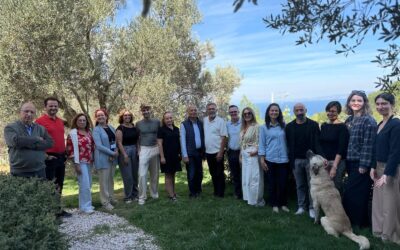
Innovation at the Heart of the Olive Value Chain: OLIWA Featured at the OLIVEPACK 2026 Workshop
On September 25, 2026, the OLIWA project took center stage at the workshop “Beyond the Olive Tree: Exploring Innovation Across the Olive Value Chain,” hosted by sister project OLIVEPACK at Zeytin Okulu (Olive School) in Karaburun, İzmir, Türkiye. OLIWA was represented...

Unlocking the Potential of Olive By-Products: OLIWA Makes a Strong Impact at RETASTE 2026
From September 16–18, 2026, the beautiful coastal city of Rethymno, Greece, served as the backdrop for RETASTE 2026 (the 6th International Conference on Rethinking Food Resources, Losses, and Waste). The OLIWA consortium actively participated in this flagship...
OLIWA Project at the “Game of Research” in Turin! 🇮🇹
We are thrilled to share that the OLIWA Project was prominently featured at the first edition of the "Game of Research", an inspiring scientific event organized by the Istituto Zooprofilattico Sperimentale (IZS) di Piemonte, Liguria e Valle d'Aosta in Torino, Italy....
OLIWA Policy Brief #1: Safe Circular Pathways for Olive By-Products, Insect-Based Feed and Bio-Based Materials
OLIWA’s June European Tour: Driving the Circular Bioeconomy Across Three Major Events
The first week of June marks a massive scale-up in the dissemination of the OLIWA Project. In a coordinated demonstration of scientific and institutional impact, our consortium members will simultaneously deploy across three major European events from June 9th to June...

OLIWA Makes Waves at the Mantova Food Science Festival: Circular Olive Economy Takes Center Stage (N)
OLIWA project (co-funded by the European Union's PRIMA program) has marked a major milestone in its dissemination strategy by establishing itself as a key scientific attraction at the prestigious Food Science Festival currently taking place in Mantova, Italy....

OLIWA Hits First WP3 Milestone: Pioneering Insect Bioconversion Presented at GR-I-CE 2026
As part of its mission to transform Mediterranean agricultural residues into high-value resources, the OLIWA Project has successfully reached its first major experimental milestone in Work Package 3 (Use of Olive Byproducts as Substrate for Insects). The preliminary...

OLIWA Shares the Stage with Environmental Icons at Riccio Day 2026 in Turin (N)
OLIWA project (co-funded by the European Union's PRIMA program) took center stage at the prestigious “Riccio Day 2026” (Hedgehog Day 2026). Organized by the "La Ninna Association" at the Valdocco Theater in Turin last night, Saturday, April 18, this major...
Scaling Up Innovation: UNITO Unveils Upgraded Research Facility for OLIWA Bioconversion Activities
As the OLIWA project advances its mission to upcycle Mediterranean olive waste, the infrastructure supporting this cutting-edge research is scaling up to meet the challenge. On June 22nd, 2026, the University of Turin (UNITO) held a public presentation at its research...
Press Release
ENG_Press Release OliwaDownload